Custom homes can sell for more than comparable production homes, but the premium depends heavily on location, build quality, design choices, and current buyer demand. Homes with thoughtful layouts, high-quality finishes, and features aligned with local buyer preferences tend to command higher prices. However, over-customization or poor market timing can limit resale value, regardless of what was spent during construction.
Introduction
Most people who build a custom home pour enormous care into the process. They choose every detail, from the floor plan to the fixtures, expecting that investment to pay off when they eventually sell. But the relationship between custom construction and resale value is more nuanced than it looks at first glance.
The short answer is yes, custom homes often sell for more. The longer answer is that “more” depends on factors most buyers and builders don’t fully account for upfront.
Key Takeaways
- Custom homes generally sell for more than production homes in the same area, but only when design choices align with broader buyer preferences.
- Location remains the single biggest driver of resale value, even for high-end custom builds.
- Over-customization (highly personal finishes, unconventional layouts) can actually reduce the pool of qualified buyers at resale.
- Quality of construction and material longevity matter significantly to appraisers and buyers alike.
- Timing the market correctly at resale can make a larger difference than the original build cost.
- Working with an experienced builder who understands resale dynamics can protect your long-term investment.
Things You Must Know
1. Not All Custom Features Add Resale Value
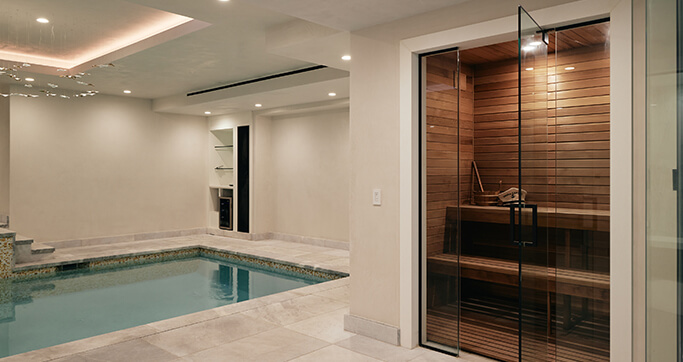
A home theater, wine cellar, or fully custom chef’s kitchen might be exactly what you want, but buyers at resale may not value those same features equally. Highly specific customizations can narrow your buyer pool, which puts downward pressure on price. Features that add broad appeal, such as open floor plans, energy efficiency, and quality craftsmanship in the right rooms, tend to translate more reliably into resale premiums.
2. Appraisers Work From Comparables, Not Construction Costs
One of the most common surprises homeowners face at resale is the gap between what they spent building and what an appraiser says the home is worth. Appraisers value homes based on what similar homes have recently sold for in the area, not the cost to build. If the local market has limited comparable custom home sales, your appraised value may fall short of your expectations regardless of build quality. This is especially relevant in markets where custom homes are rare.
3. The Land Matters as Much as the Structure
Custom homes are frequently built on chosen lots, and that lot’s location, size, and access can either amplify or constrain resale value. A well-built custom home on a lot with poor access, noise issues, or in a declining neighborhood will struggle to command a premium. Before building, evaluating the long-term desirability of the land is just as important as planning the home itself.
Do Custom Homes Actually Sell for More Than Production Homes?
Studies on housing market data have consistently shown that custom-built homes tend to sell at a premium compared to tract or production homes in the same area, with some analyses suggesting the price difference ranges from 10% to 20% or more, depending on local market conditions and the quality of the build.
That said, the premium is not guaranteed. It has to be earned through decisions made before, during, and after construction. A custom home that was built with poor contractor oversight, materials that have since aged badly, or a layout that doesn’t match how buyers in that area actually live can sell at or even below production home prices.
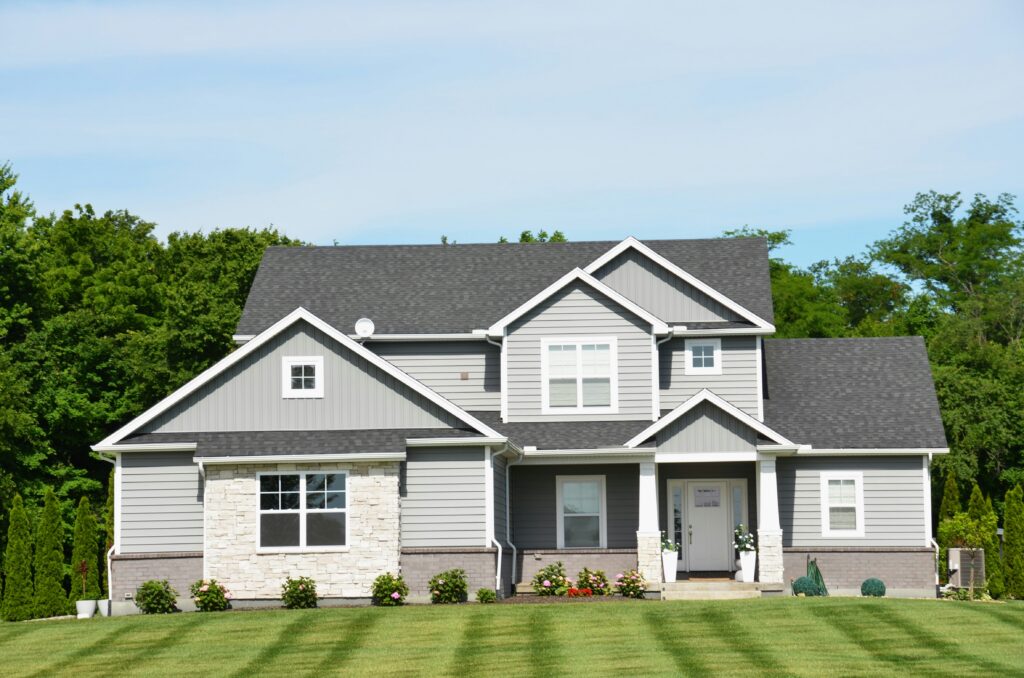
The strongest predictor of a custom home selling for more is how closely the build reflects what buyers in that specific market want, not just what the original owner wanted.
What Drives Higher Sale Prices for Custom Homes?
| Factor | Impact on Resale Value | Notes |
| Location and lot quality | Very High | Cannot be changed after construction |
| Build quality and materials | High | Longevity and finish quality visible at inspection |
| Energy efficiency features | Moderate to High | Increasingly valued by buyers in all price ranges |
| Floor plan functionality | High | Open layouts, storage, and flow matter at resale |
| Highly personal customizations | Low to Neutral | Can reduce buyer pool at resale |
| Market timing at resale | Variable | Seller’s markets amplify premiums significantly |
How the Build Process Affects Long-Term Value
The decisions made during construction directly shape what a home can command years later. Buyers at resale are essentially evaluating the quality of someone else’s judgment, so the choices made throughout the build matter beyond personal preference.
Learning how to build a custom home with resale in mind from the start is one of the most practical things an owner-builder can do. That means thinking about neutral but high-quality finishes, ensuring the layout works for families of different sizes, and avoiding structural choices that make future modification difficult.
- Choose a lot with long-term desirability. School districts, traffic patterns, and neighborhood development plans all affect what buyers will pay years later.
- Prioritize structural and systems quality over cosmetic upgrades. Roofing, insulation, plumbing, and HVAC condition are among the first things inspectors and serious buyers evaluate.
- Design for broad appeal in high-traffic spaces. Kitchens, primary bedrooms, and bathrooms drive buyer decisions more than any other rooms. Quality here translates to offers.
- Document everything. Permits, warranties, material specifications, and contractor records add tangible credibility and comfort for buyers at resale.
- Maintain the home consistently. A custom home that has been well-maintained throughout its life commands a premium that a comparable neglected home simply cannot match.
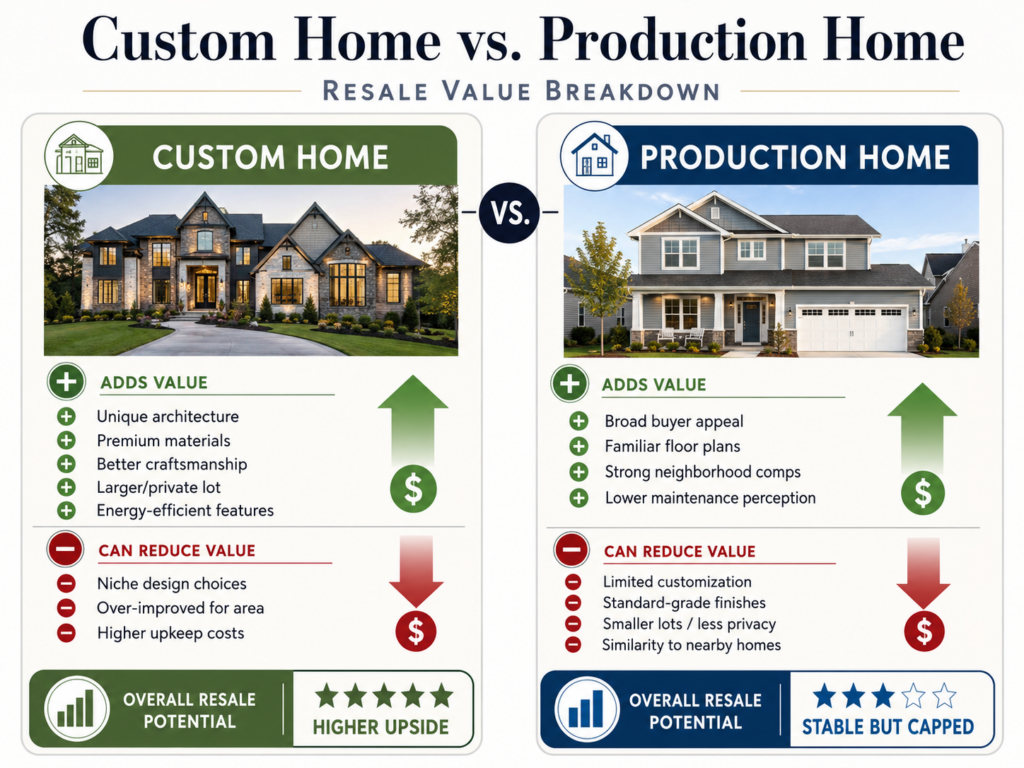
Custom Homes vs. Production Homes: A Resale Comparison
| Feature | Custom Home | Production Home |
| Design flexibility | Full control | Limited to builder packages |
| Build quality variance | High (owner-directed) | Standardized |
| Appraisal comparables | Can be limited | Easier to find comparables |
| Buyer appeal at resale | Depends on design choices | Broader initial appeal |
| Price premium potential | Higher ceiling | More predictable range |
Common Mistakes That Hurt Custom Home Resale Value
- Over-building for the neighborhood. A $1.5M custom home surrounded by $600K properties will struggle to appraise and attract qualified buyers at full value.
- Skipping permits or cutting corners during construction. Unpermitted work is a serious red flag in any home inspection and can delay or kill a sale.
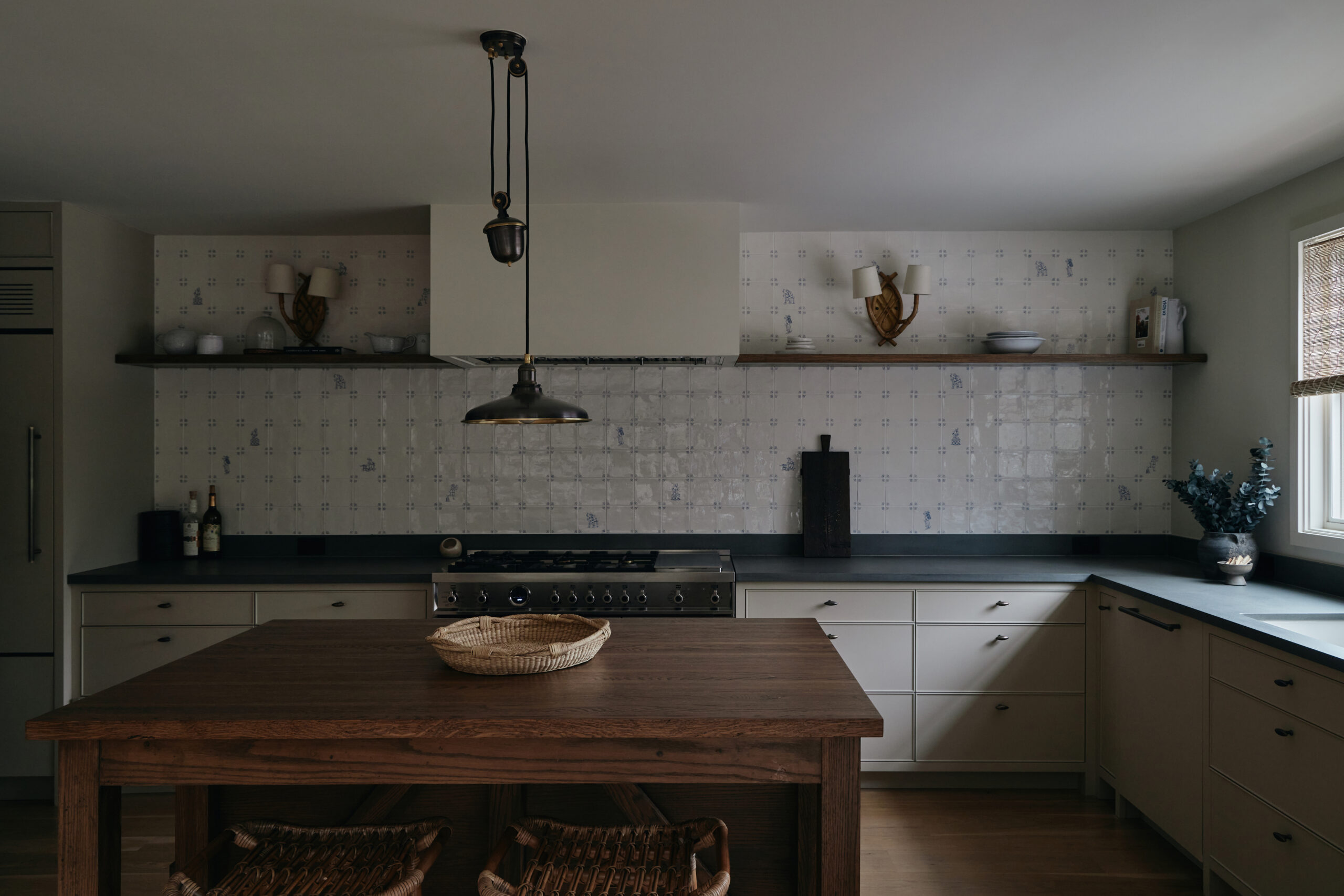
- Choosing very niche finishes. Ultra-specific tile patterns, unusual color palettes, or one-of-a-kind structural features can make a home harder to sell without costly updates.
- Neglecting energy systems. Older HVAC systems, poor insulation, or outdated electrical panels are increasingly deal-breakers for buyers who understand their long-term operating costs.
- Ignoring curb appeal. Custom homes often win buyers before they even enter the front door. Landscaping and exterior finishes have an outsized influence on first impressions and offer price.
Real estate research has shown that energy-efficient features, including properly insulated windows, high-efficiency HVAC systems, and solar panels, can increase a home’s resale value by a meaningful percentage, with some estimates placing the premium between 3% and 7% compared to similar homes without those features.
How Long It Takes to Build Also Affects the Value Equation
Custom home construction timelines typically range from 10 months to over 2 years depending on complexity, lot conditions, permitting timelines, and contractor availability. Market conditions can shift significantly during that window, which affects the home’s value at the time of completion relative to what was projected at the start of construction.
Understanding how long it takes to build a custom home helps buyers set realistic expectations about when they’ll be in the property, and when resale could realistically happen given standard appreciation timelines.
Building during a strong seller’s market means that by the time the home is complete, conditions may have shifted. Conversely, completing a custom build just before a market upturn can position the owner exceptionally well. Neither outcome is guaranteed, which is why long-term holding periods generally work in the custom homeowner’s favor.
Frequently Asked Questions
Do custom homes sell for more than production homes?
In most cases, yes. Custom homes tend to sell at a premium because they offer unique layouts, higher-quality materials, and features tailored to discerning buyers. The premium varies widely based on location, design choices, and local market conditions. Homes where the customization aligns with what buyers in that area actually want command the strongest prices.
What is the 3 3 3 rule for home buying?
The 3 3 3 rule is a general budgeting guideline suggesting buyers spend no more than 3 times their annual gross income on a home, keep monthly housing costs within 30% of take-home pay, and maintain a 3-month cash reserve after closing. It’s a simplified framework for avoiding overextension at purchase, though individual circumstances vary and financial advisors often recommend a more detailed assessment.
When is the worst time to sell a house?
Broadly speaking, late fall and winter tend to see slower buyer activity in most markets, which can mean fewer offers and more negotiating leverage in the buyer’s favor. That said, local market dynamics vary considerably. In some regions, winter listings face less competition and attract more serious buyers. Listing strategy should be based on local data, not just seasonal generalizations.
Can you negotiate with a custom home builder?
Yes, and most experienced buyers do. Builders often have more flexibility on allowances, upgrades, lot premiums, and closing cost contributions than on the base price itself. The best time to negotiate is before signing a contract, when the builder has more incentive to close. Asking about spec inventory, model homes for sale, or end-of-quarter availability can also open negotiating opportunities that aren’t advertised.
What is the 70/30 rule in negotiation?
The 70/30 rule in negotiation is a listening principle: the more effective party listens 70% of the time and speaks 30% of the time. In real estate negotiations specifically, this translates to gathering as much information as possible about the seller’s (or builder’s) motivations before making an offer. Understanding what the other side values most, whether that’s closing speed, certainty of financing, or price, gives you considerably more leverage than leading with your own demands.
Final Thoughts
Custom homes do sell for more, but not automatically. The premium is built over time, through intentional decisions about location, quality, design, and maintenance. A custom home built with resale in mind, where craftsmanship is high and design choices are thoughtful rather than purely personal, consistently outperforms comparable production homes at the point of sale.
For homeowners who treat the build process as a long-term investment rather than just a personal project, the financial upside is real and defensible. The key is making decisions during construction that future buyers will also recognize as valuable.
If you’re planning a custom home and want to build something that holds and grows in value, Buildform can help you think through the decisions that matter most. Reach out at +1 631-528-2442 to talk through your project with a team that understands both the build process and the long-term picture. You can also explore Buildform’s custom home services to see how they approach projects from design through completion.