Finding the right contractor for a home addition in the Hamptons requires more than a quick online search. The local market has distinct licensing requirements, seasonal scheduling pressures, and high-end construction standards that make vetting more important here than in most regions. This guide walks through the full process, from knowing what to look for to avoiding the most common hiring mistakes.
Key Takeaways
- Always verify a contractor’s New York State license and insurance before signing anything.
- The Hamptons market runs on relationship and reputation; referrals from local architects and designers carry real weight.
- Get at least three detailed bids and compare scope, not just price.
- Scheduling is tighter here than most markets, especially in the spring-to-summer window when demand peaks.
- A well-executed home addition can meaningfully increase your property’s value in one of the most competitive real estate markets in the country.
- Understand how your addition may affect property taxes before the project begins.
A home addition is one of the most significant investments a Hamptons homeowner can make. The scale of these projects, along with the region’s strict zoning oversight and the caliber of craftsmanship buyers expect here, means that who you hire matters enormously. This guide covers what the process actually looks like, where to find qualified candidates, and how to protect yourself before a single permit is pulled.
Things You Must Know
1. Licensing Requirements Are Non-Negotiable in New York
New York State requires contractors to hold a valid Home Improvement Contractor (HIC) license for residential work above certain dollar thresholds, and some municipalities in the Hamptons have additional local registration requirements. Always ask for the license number and verify it through the New York State Department of Labor or the relevant town’s building department. A contractor who hesitates at this request is a contractor worth walking away from.
2. The Hamptons Has a Compressed Building Season
Many Hamptons homeowners prefer construction outside of peak summer months to avoid disruption during their primary use season. This creates a rush for contractors in late summer and fall, and again in early spring. Quality contractors in this market book out months in advance. If you’re planning a project, beginning your search six to twelve months ahead gives you access to the best teams rather than whoever happens to be available.
3. Scope Creep Is the Biggest Budget Risk on Additions
Home additions frequently uncover surprises: aging infrastructure, foundation inconsistencies, or waterproofing issues that weren’t visible before demolition. A detailed written scope of work, signed before construction begins, protects you if costs start to drift. Ask any contractor how they handle change orders and what documentation they provide when unexpected conditions arise.
Where Do You Actually Find Qualified Contractors for Home Additions?
The Hamptons construction market is relationship-driven. Some of the best contractors here don’t advertise heavily because they stay fully booked through referrals. That means your search strategy needs to go beyond a basic Google search.
Start with local architects. If you’re working with an architect on your addition design (and for anything complex, you should be), ask for their contractor recommendations directly. Architects who regularly work in East Hampton, Southampton, or Bridgehampton have already filtered their referral lists through years of project experience.
Local real estate agents who specialize in high-end Hamptons properties are another strong source. They’ve seen the outcomes of contractor work firsthand during listing inspections and know who delivers quality versus who cuts corners.
Beyond referrals, the following channels are worth using:
- The National Association of the Remodeling Industry (NARI) has a contractor directory with verified members.
- The Better Business Bureau lets you check complaint history and accreditation status.
- Houzz has a strong local contractor presence, with project photos and homeowner reviews specific to the Hamptons and North Fork areas.
- Angi (formerly Angie’s List) includes reviews and licensing data in one place.
- Your town’s building department can tell you which contractors regularly pull permits locally, which is a strong signal of legitimacy.
How Do You Evaluate and Compare Contractors?
Finding names is only the beginning. Vetting them properly before committing is where most homeowners either protect themselves or leave themselves exposed.
Step-by-Step: How to Vet a Contractor for a Home Addition
- Confirm licensing and insurance. Verify the NY State HIC license number and ask for certificates of general liability insurance and workers’ compensation. Call the insurer directly to confirm coverage is active.
- Review local project history. Ask for a portfolio of completed additions in the Hamptons specifically. Local experience with zoning, soil conditions, and coastal construction requirements matters here in ways that out-of-area experience doesn’t fully cover.
- Check references from similar projects. Ask for three references from homeowners who had additions of comparable size built in the last two years. Call them. Ask specifically about timeline adherence, communication, and how the contractor handled unexpected issues.
- Request detailed written bids. A professional bid breaks down materials, labor, subcontractor costs, and contingency assumptions. Vague bids are a red flag regardless of how low the price looks.
- Understand their subcontractor relationships. Most general contractors use subcontractors for electrical, plumbing, and HVAC work. Ask who those subs are, how long they’ve worked together, and whether they’re licensed independently.
- Review the contract terms carefully. Before signing, confirm that the contract includes a detailed scope of work, a payment schedule tied to milestones (not arbitrary dates), a change order process, and a warranty on labor.
What Should You Expect to Pay for a Home Addition in the Hamptons?
| Addition Type | Typical Scope | Key Contractor Skills Needed |
| Primary suite addition | New square footage, full bath, closet | Structural, plumbing, finish carpentry |
| Garage addition or conversion | Foundation work, new framing or retrofit | Foundation, framing, zoning knowledge |
| Kitchen expansion | Extended footprint, appliance relocation | Structural, plumbing, electrical, design |
| Screened porch or sunroom | New structure attached to home | Framing, weather sealing, coastal durability |
| Second-story addition | Full floor or partial upper level | Structural engineering, phased construction |
If you’re evaluating which type of addition offers the best return on your investment, understanding what home additions add the most value in the Hamptons is a good place to start before finalizing your project scope.
It’s also worth understanding how your addition may affect your annual tax bill. You can get a solid overview by reviewing how home additions impact property taxes in the Hamptons before your project breaks ground.
How Does the Hamptons Market Differ From Other Areas?
Coastal construction also presents material considerations that inland projects don’t. Salt air accelerates corrosion in fasteners, windows, and HVAC equipment if the wrong specifications are used. Experienced local contractors account for this in their material selections in ways that out-of-area teams sometimes miss.
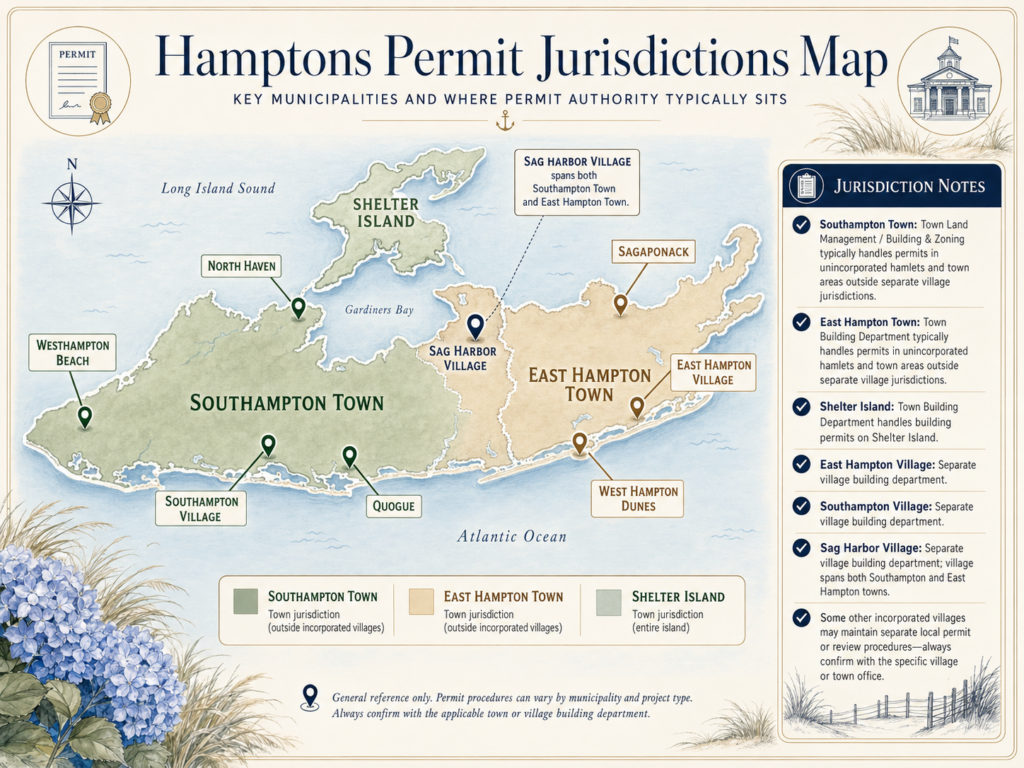
The towns within and adjacent to the Hamptons each have their own building departments: East Hampton, Southampton, Shelter Island, and the various incorporated villages within them. A contractor who pulls permits regularly across these municipalities will move through the approval process faster than one who treats it as unfamiliar territory.
Common Mistakes Homeowners Make When Hiring for Home Additions
- Choosing on price alone. The lowest bid in a high-cost market often means cut corners on materials, unlicensed subcontractors, or a contractor who underestimated the scope and will make up the difference through change orders.
- Skipping permit verification. Unpermitted additions can create serious problems at resale and may require expensive remediation. Always confirm your contractor pulls the required permits, and ask to see them.
- Not defining the payment schedule. Paying too much upfront gives a contractor little incentive to stay on schedule. Tie payments to completed milestones, not calendar dates.
- Ignoring the contractor’s communication style. How a contractor communicates during the bidding process is how they’ll communicate during construction. If they’re slow, vague, or defensive before you’ve signed anything, it won’t improve once they have your deposit.
- Skipping the reference calls. Reading reviews online is useful, but a five-minute phone call with a past client tells you far more than any star rating.
What Should a Strong Contractor Proposal Include?
| Proposal Element | What to Look For | Red Flag |
| Scope of work | Detailed description of all work included | Vague or one-page summary |
| Material specifications | Named brands, grades, or allowances stated | “Standard materials” with no detail |
| Payment schedule | Tied to project milestones | Large upfront deposit (over 30–35%) |
| Change order process | Written, signed approval required for changes | No change order clause present |
| Warranty terms | Defined labor warranty period stated | No warranty or verbal-only assurance |
| Timeline | Start date, milestones, and projected completion | Estimated completion with no detail |
If you want a realistic sense of how long the construction phase itself typically runs, this overview of how long home additions take covers the key variables that affect scheduling.
Frequently Asked Questions
What not to tell a contractor?
Avoid telling a contractor that you’re in a rush, that you have an unlimited budget, or that you “just trust them” to handle decisions without your sign-off. Expressing urgency can reduce your negotiating leverage and invite upcharges. Saying you have an open budget signals that cost controls aren’t a priority for you. And deferring all decisions without documentation removes the paper trail you’d need if a dispute arises. Stay engaged, informed, and specific throughout the project.
What are some reputable construction companies in the Hamptons?
The Hamptons has a number of established construction firms with strong local reputations, though the market is competitive and contractor availability changes. Buildform works with homeowners in the Hamptons on home additions and custom construction. Beyond that, the best way to identify reputable local firms is through architect referrals, building department familiarity, and homeowner reviews tied to completed projects in Southampton, East Hampton, and surrounding villages specifically.
How do you find a general contractor for a home renovation?
Start with referrals from architects, interior designers, or neighbors who’ve completed similar projects recently. Cross-check names through the BBB, Houzz, and your town’s building department permit records. Request at least three bids, call at least two references per contractor, verify licensing and insurance independently, and review the full contract before signing. In a market like the Hamptons, starting this process months before your target start date gives you the best selection of qualified candidates.
Ready to Plan Your Home Addition in the Hamptons?
Finding the right contractor comes down to doing the work upfront: verifying credentials, comparing detailed proposals, talking to past clients, and choosing a team that knows this specific market. The Hamptons has no shortage of contractors willing to take on the work, but the ones worth hiring have a local track record, deep permit knowledge, and a communication style that holds up over the course of a multi-month project.
Buildform works with homeowners across the Hamptons on additions and custom residential construction. If you’re in the early stages of planning, explore our home extensions and additions services to understand what’s possible for your property, or reach out to start a conversation about your project.