Home additions in the Hamptons, NY typically trigger a property tax reassessment because they increase your home’s assessed value. The size, type, and permitted status of the addition all affect how much your taxes change. Understanding how Suffolk County assesses improvements can help you plan your project without unexpected financial surprises.
If you’re planning a home addition on your Hamptons property, the construction cost is only part of the financial picture. Property taxes in this part of Long Island are among the highest in New York State, and adding square footage or new amenities will almost certainly draw attention from your local assessor’s office. Knowing what to expect before you break ground can save you from sticker shock when your next tax bill arrives.
Key Takeaways
- Any permitted home addition in New York is subject to reassessment, which can raise your annual property tax bill.
- The impact depends on the type of addition, the square footage added, and how your local assessor calculates market value.
- In the Hamptons, where baseline property values are already high, even modest additions can produce noticeable tax increases.
- Some improvements may qualify for partial tax exemptions under New York State law, reducing the short-term tax burden.
- Unpermitted additions can create much larger financial and legal problems than the taxes you were trying to avoid.
- Consulting a local tax professional or assessor before starting your project is always worthwhile at this price point.
Things You Must Know
1. The Permit Is What Triggers the Reassessment
When you pull a building permit for a home addition, that information flows directly to your municipality’s assessor. The assessor will then schedule an inspection or review the permit details to determine how much value has been added to the property. The reassessment doesn’t necessarily happen the same year the permit is issued; timing can vary by town, but you should plan for it within one to two assessment cycles.
2. Assessed Value and Market Value Are Not the Same Number
In New York, towns assess properties at a percentage of full market value, and that percentage varies by municipality. In Suffolk County, where the Hamptons towns of Southampton and East Hampton are located, the relationship between assessed value and full market value can be confusing. Your tax bill is calculated using the assessed value, the equalization rate, and the local tax rate combined, so a large addition doesn’t always produce a proportionally large tax increase. A local real estate attorney or tax grievance specialist can help you interpret what any reassessment actually means for your bill.
3. Not Every Addition Carries the Same Tax Weight
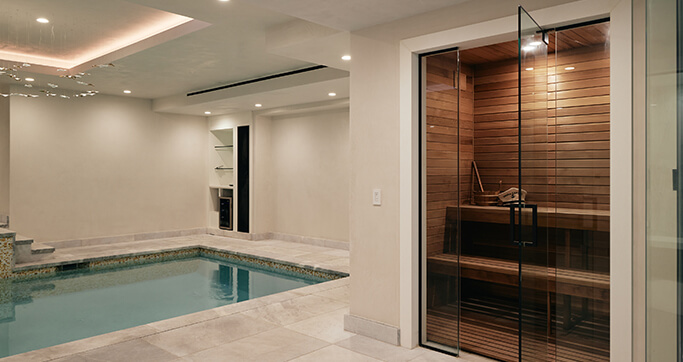
A primary bedroom suite addition will be assessed differently than a detached garage or an accessory dwelling unit. Finished living space adds more value per square foot than unfinished storage. Luxury features like a home theater, wine cellar, or indoor pool will factor into the assessor’s valuation more heavily than a simple mudroom or laundry room expansion. The type of addition matters as much as its size when estimating your future tax exposure.
How Does Property Tax Reassessment Work in New York?
New York State gives individual municipalities significant control over how and when properties are reassessed. Some towns conduct annual reassessments; others do so on irregular cycles. In the Hamptons region, both Southampton Town and East Hampton Town operate their own assessment processes, so the rules can differ depending on which side of the town line your property sits on.
When you add to your home, the assessor’s job is to estimate the increase in your property’s market value as a result of that addition. They’ll use comparable sales data, cost-based methods, or a combination of both. The resulting increase in assessed value is then multiplied by your local tax rate to determine how much your bill goes up.
What Kinds of Home Additions Increase Property Taxes the Most?
Not all additions are treated equally by assessors. The following table gives a general sense of how different addition types tend to affect assessed value, though actual outcomes will depend on your specific town’s assessment practices and current market conditions.
| Addition Type | Likely Tax Impact | Notes |
| Primary suite addition | High | Adds finished living space and bedroom count |
| In-law suite / ADU | High | Adds rentable/livable square footage |
| Garage addition | Moderate | Unfinished space carries less weight than living area |
| Sunroom or screened porch | Moderate | Depends on whether it’s conditioned space |
| Deck or patio | Low to moderate | Outdoor improvements add less than interior space |
| Pool house | Moderate to high | Especially relevant in the Hamptons luxury market |
What Are Property Taxes Like in the Hamptons Specifically?
The high baseline means that any upward reassessment from a home addition starts from an already elevated number. A percentage-point increase in assessed value translates into a larger raw dollar amount here than it would in most other parts of the state. That’s why Hamptons homeowners tend to be more attentive to the tax consequences of improvements than homeowners in lower-value markets.
If you’re curious about how your addition might affect long-term property value as well as taxes, it’s worth exploring whether custom homes and major additions sell for more in this market, since appreciation potential often offsets the tax increase over time.
Does New York State Offer Any Tax Exemptions for Home Improvements?
Yes. New York State has a provision that can soften the tax impact of certain residential improvements, particularly for older or long-term homeowners. The most relevant program is the Reconstruction, Alteration, or Improvement Exemption (sometimes called the 421 residential exemption at the local level), which allows a temporary exemption on the increased assessment resulting from a qualifying improvement.
There are also senior citizen exemptions and energy efficiency improvement credits that may apply depending on your situation. These are handled at the town level, so contacting the Southampton Town Assessor’s Office or the East Hampton Town Assessor directly is the right first step.
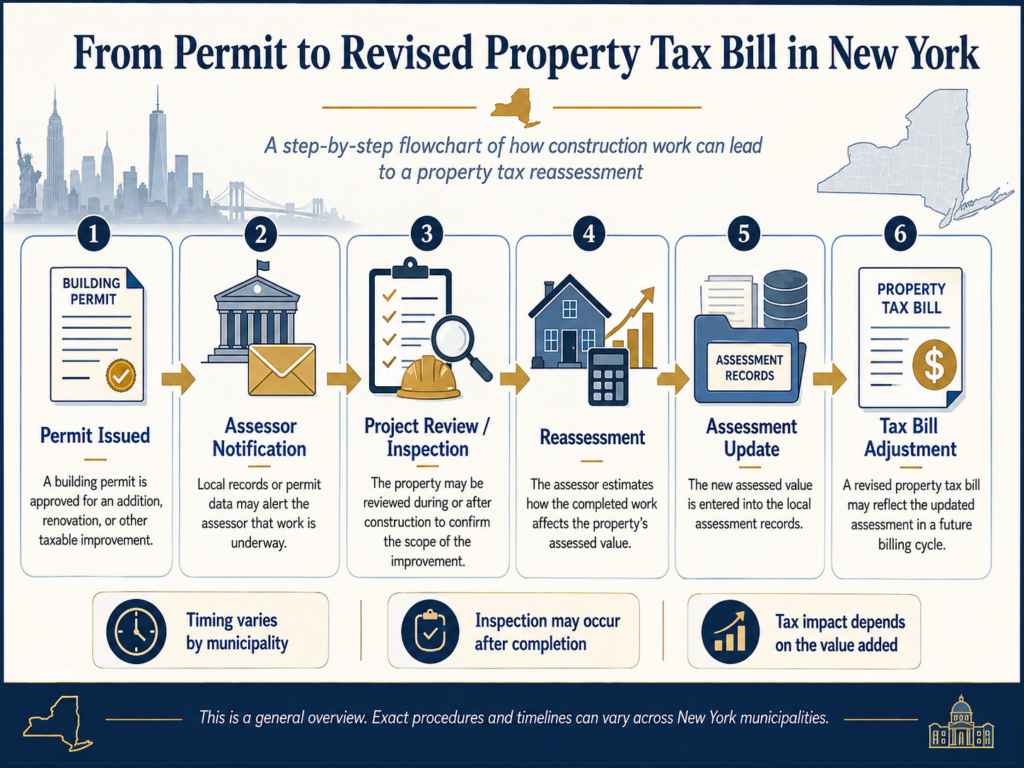
Step-by-Step: What Happens to Your Taxes After a Home Addition
- Permit Application: You or your contractor submits a building permit application to your town’s building department. This creates an official record of the planned improvement.
- Permit Issued: Once approved, the permit is issued and the project can begin. The assessor’s office is typically notified at this stage or upon completion.
- Certificate of Occupancy (CO): After construction passes final inspection, a Certificate of Occupancy is issued. This is often the formal trigger for the assessor to schedule a review.
- Assessor Review: The assessor evaluates the addition using market data, cost estimations, or an on-site inspection. They determine the new assessed value of the property.
- Notice of Change: You receive a notice showing your new assessed value. In New York, you have a right to grieve (appeal) this assessment if you believe it’s inaccurate.
- Tax Bill Adjustment: Your revised assessed value is applied to the current tax rate, and your new annual bill reflects the change. This may take effect within the same tax year or the following one, depending on timing.
Understanding how long home additions take is also relevant here, since project timelines affect when the CO is issued and when the reassessment clock starts.
Common Mistakes Hamptons Homeowners Make With Addition Projects and Taxes
- Skipping the permit to avoid reassessment. Unpermitted work is discoverable during a sale, refinance, or routine assessment update. The financial and legal consequences of an unpermitted addition far outweigh any short-term tax savings.
- Not applying for available exemptions. Many homeowners don’t realize that New York offers temporary assessment exemptions for qualifying improvements. Missing the application window can mean paying higher taxes for years unnecessarily.
- Underestimating the compounding effect. In the Hamptons, school district taxes make up a large portion of the total property tax bill. A reassessment that increases your taxable value affects every taxing jurisdiction simultaneously, not just one line item.
- Confusing renovation with addition. Cosmetic renovations like kitchen updates or bathroom remodels don’t always trigger reassessment. Structural additions that increase square footage or bedroom count almost always do. Knowing the difference helps you plan accurately.
- Failing to grieve an inaccurate assessment. If the assessor’s revised value seems disproportionate, you have the right to file a grievance. Many homeowners don’t pursue this even when the assessment is legitimately contestable.
How Addition Size and Scope Affects the Tax Calculation
A 500-square-foot primary suite in Bridgehampton will be assessed very differently than the same addition in a mid-tier suburb. The local market signals that finished space here commands significant value per square foot, and assessors have access to those same comps.
| Project Scale | Typical Tax Consequence | Planning Consideration |
| Under 300 sq ft | Modest increase likely | Still permit-required; may qualify for exemption |
| 300–800 sq ft | Noticeable increase | Budget for reassessment in year 1 or 2 |
| 800+ sq ft | Significant increase expected | Consult assessor or tax attorney before starting |
| Full second floor | Substantial increase | Factor into total project ROI analysis |
For homeowners considering a larger scope of work, it can also be useful to understand the broader home extensions and additions process before committing to a project plan.
Frequently Asked Questions
What home improvements increase property taxes in New York?
Any improvement that adds square footage, increases the number of rooms, or substantially increases your home’s market value can trigger a reassessment in New York. This includes room additions, new floors, attached garages, finished basements, and accessory dwelling units. Cosmetic updates like painting, flooring replacement, or fixture swaps typically don’t affect assessed value.
What are the property taxes like in the Hamptons?
Property taxes in the Hamptons are administered through Southampton and East Hampton towns, with school district levies making up the largest portion of most bills. While effective tax rates can appear modest relative to assessed value, the high property values in this market mean annual tax obligations are typically substantial. Homeowners should consult the relevant town assessor or a local tax professional for current rates and any recent changes.
Does adding a room increase property taxes?
Yes, in most cases. Adding a room increases your home’s square footage and often its bedroom count, both of which contribute to assessed value. The assessor will evaluate the addition after the Certificate of Occupancy is issued and adjust your assessment accordingly. The increase in your tax bill will depend on the assessed value added and your current local tax rate.
What home improvements are tax exempt in New York?
New York State allows municipalities to offer temporary exemptions on the increased assessed value resulting from qualifying residential improvements under Real Property Tax Law Section 421. Energy efficiency improvements may also qualify for separate exemptions. Eligibility varies by town, so you need to apply through your local assessor’s office and confirm deadlines before construction begins.
What is the most overlooked tax deduction for homeowners?
For homeowners who use part of their property as a home office or rental space, there may be deductible expenses tied to the proportional use of the property. Many homeowners also miss the opportunity to grieve their property assessment when comparable sales data suggests it’s too high. Property tax grievances in New York are relatively straightforward to file and can produce meaningful savings over multiple years, but the majority of eligible homeowners never pursue them.
Plan Your Addition With the Full Financial Picture in Mind
A home addition in the Hamptons is a significant investment, and the property tax implications are a real part of the cost equation. Understanding how reassessment works, what exemptions may be available, and how the type and size of your addition affects your bill puts you in a much stronger position to plan responsibly.
At Buildform, we work with Hamptons homeowners on additions that are designed thoughtfully from the start, with an eye toward long-term value, structural quality, and the realities of building in this market. If you’re planning an addition and want to understand the full scope of what’s involved, including timeline, permitting, and how to get the process right the first time, we’re glad to talk through it.
Contact Buildform to discuss your home addition project in the Hamptons. We’ll help you understand what to expect at every stage, from permit to certificate of occupancy.